
There is a tile that has been made by hand in Morocco for over a thousand years. It is imperfect by design. No two pieces are the same color, thickness, or surface finish. It reacts to light in a way that no other tile material on the market can replicate. And over the past several years, it has become one of the most specified materials in luxury residential design across Southern California.
That tile is Zellige — and Famosa Tile in Costa Mesa carries one of the most carefully curated Zellige selections in Orange County.
“Zellige is one of those materials that looks completely different in a photograph versus in person,” says Vanessa, Famosa’s Managing Partner and day-to-day lead. “When designers see it in the showroom — the way the light catches each facet, the depth of the color — they understand immediately why it’s having this moment. There’s nothing else that does what it does.”
For designers who have been curious about Zellige — or who have already specified it and want to understand it more deeply — this guide covers everything you need to know.
What Is Zellige, Exactly?
Zellige (pronounced ZEL-ij) is a traditional Moroccan clay tile, hand-cut from fired terracotta and glazed with natural mineral pigments. The production process has changed remarkably little over the past millennium. Each tile is mixed, shaped, wood-fired, hand-glazed, and then hand-cut by artisans called Maalem — craftspeople who have typically trained in techniques passed down from generation to generation.
The result of this entirely handmade process is what gives Zellige its defining characteristic: variation. Every tile is hand-molded, hand-cut, and hand-glazed, which also means no two Zellige tiles are exactly alike. Each tile is slightly different in glaze depth and color saturation. Each tile has a subtly irregular surface that creates the distinctive faceted look so prized by designers.
This variation is not a defect. It is the point.
“When a designer asks me if the tiles will all look exactly alike, I know they haven’t fully understood what Zellige is. The entire beauty of the material is that they won’t. You’re not looking for perfection — you’re looking for life. And Zellige has more life than almost anything else we carry.”
Why Zellige Is Having a Moment — And Why It Will Last
The rise of Zellige in interior design over the past five to seven years is not a trend in the disposable sense of the word. It reflects a broader movement in luxury residential design toward materials that are handmade, historically rooted, and visually alive — as opposed to the hyper-uniform, machine-produced surfaces that dominated design aesthetics in the 2010s.
Zellige works beautifully in virtually any aesthetic. In a Moroccan or Mediterranean-inspired interior, it is the obvious choice. In a minimal, contemporary kitchen, a Zellige backsplash in a soft white or warm ivory creates warmth and texture without visual noise. In a maximalist bathroom, a floor-to-ceiling Zellige installation in deep forest green or cobalt creates an environment that looks like nowhere else.
The material also photographs exceptionally well. In an era when the visual identity of a designer’s portfolio is built as much on Instagram as on printed publications, this matters. Zellige catches light in every direction — which means it looks different and equally compelling in every photograph taken throughout the day.
It is, in the most literal sense, a material that never gets old.
Understanding Zellige Variation: What to Expect and How to Work With It
For designers specifying Zellige for the first time, understanding the nature of its variation is essential to a successful project.
Color variation is the most significant factor to communicate to clients upfront. Zellige glaze is not uniform — even within a single box of tiles, individual pieces will be lighter and darker, more saturated and less. The overall effect reads as beautiful and intentional. Individual tiles, pulled from the installation and held up to bright light, look inconsistent. Make sure clients understand they are buying a field, not a tile.
Sizing variation means that Zellige installations typically require tighter tolerances from the setting team. A standard 4-inch Zellige tile might have a true dimension range of 3.85 to 4.15 inches — which means the installer needs to make micro-adjustments throughout the installation to maintain even grout lines. This is not difficult for an experienced installer, but it is not the same process as setting large-format porcelain.
Surface variation is what creates the faceted play of light that makes Zellige so distinctive. The slightly irregular surface means that adjacent tiles catch light at different angles — producing the almost iridescent quality that makes a Zellige installation look alive from across a room.
Where Zellige Works: Application Guide
Zellige is most commonly specified for wall applications — but it has a wide range of appropriate uses, each with specific installation considerations.
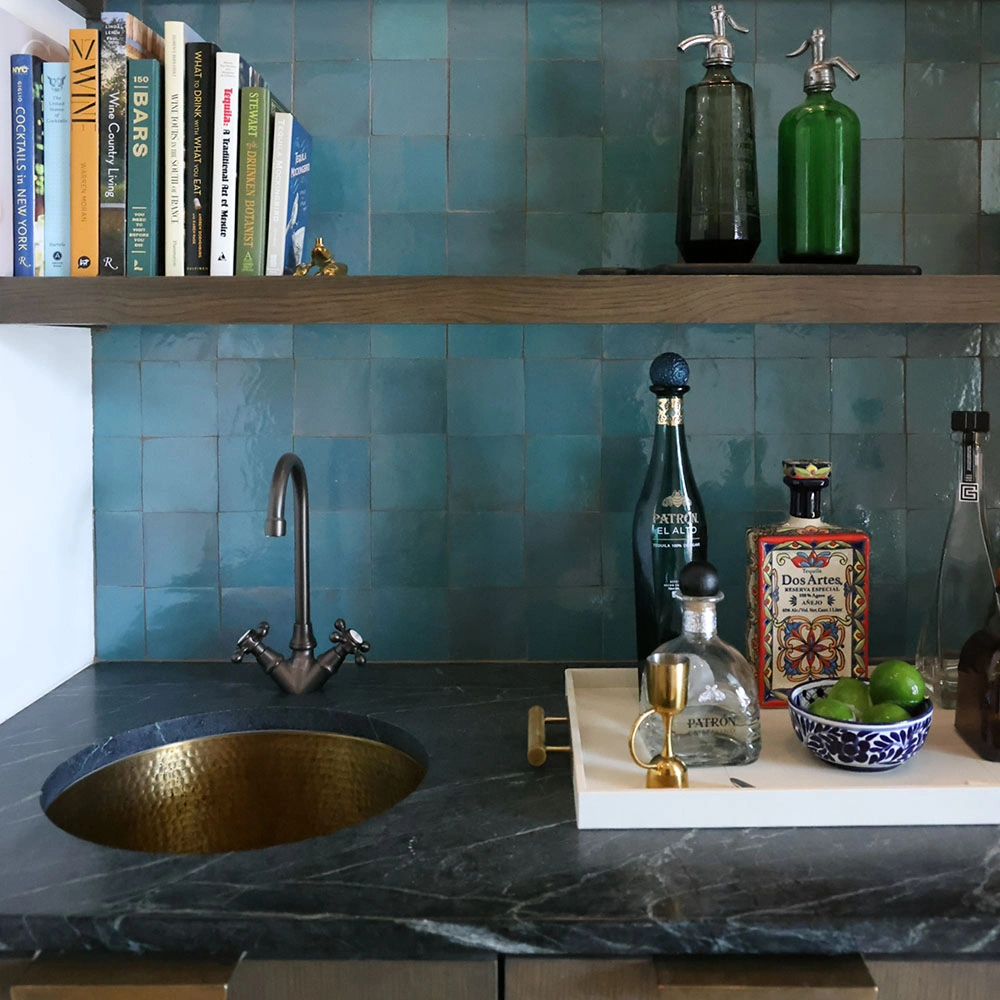
Kitchen backsplash: The classic Zellige application. Works beautifully in both contemporary and traditional kitchens. The surface variation hides everyday splatter and cooking residue far better than a less varied, more consistent tile, and the material develops a gentle patina over time that only improves with age.
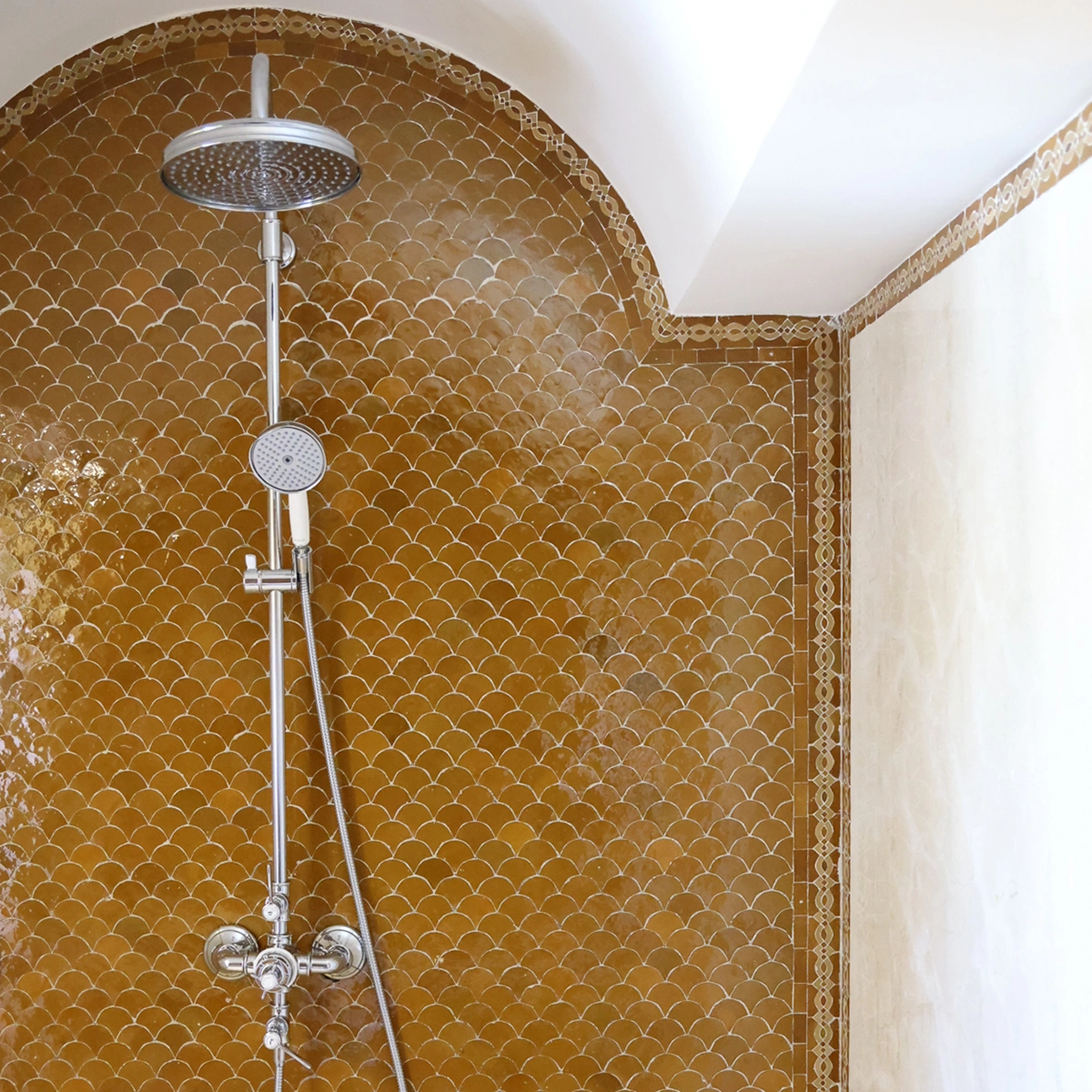
Bathroom walls: Zellige is equally at home in a primary bath, powder room, or shower surround. For shower applications, proper waterproofing and a penetrating sealer are essential — Zellige is porous by nature and requires protection in wet environments.
Feature walls: A full Zellige feature wall — in a dining room, entry, or living room — makes a statement unlike any other tile material. The scale amplifies every quality that makes Zellige distinctive.
Fireplace surrounds: One of the most beautiful applications for Zellige. The faceted surface catches the light of the fire in a constantly shifting way that no flat tile can replicate.
Floor applications: Zellige can be used on floors, but it requires a specific glaze density (not all Zellige products are rated for floor use) and will develop wear patterns over time. A skilled installer is essential for Zellige floor applications, as irregularities in thickness can cause lippage that will need adjustment in the field during installation.
Color and Collection: What Famosa Carries
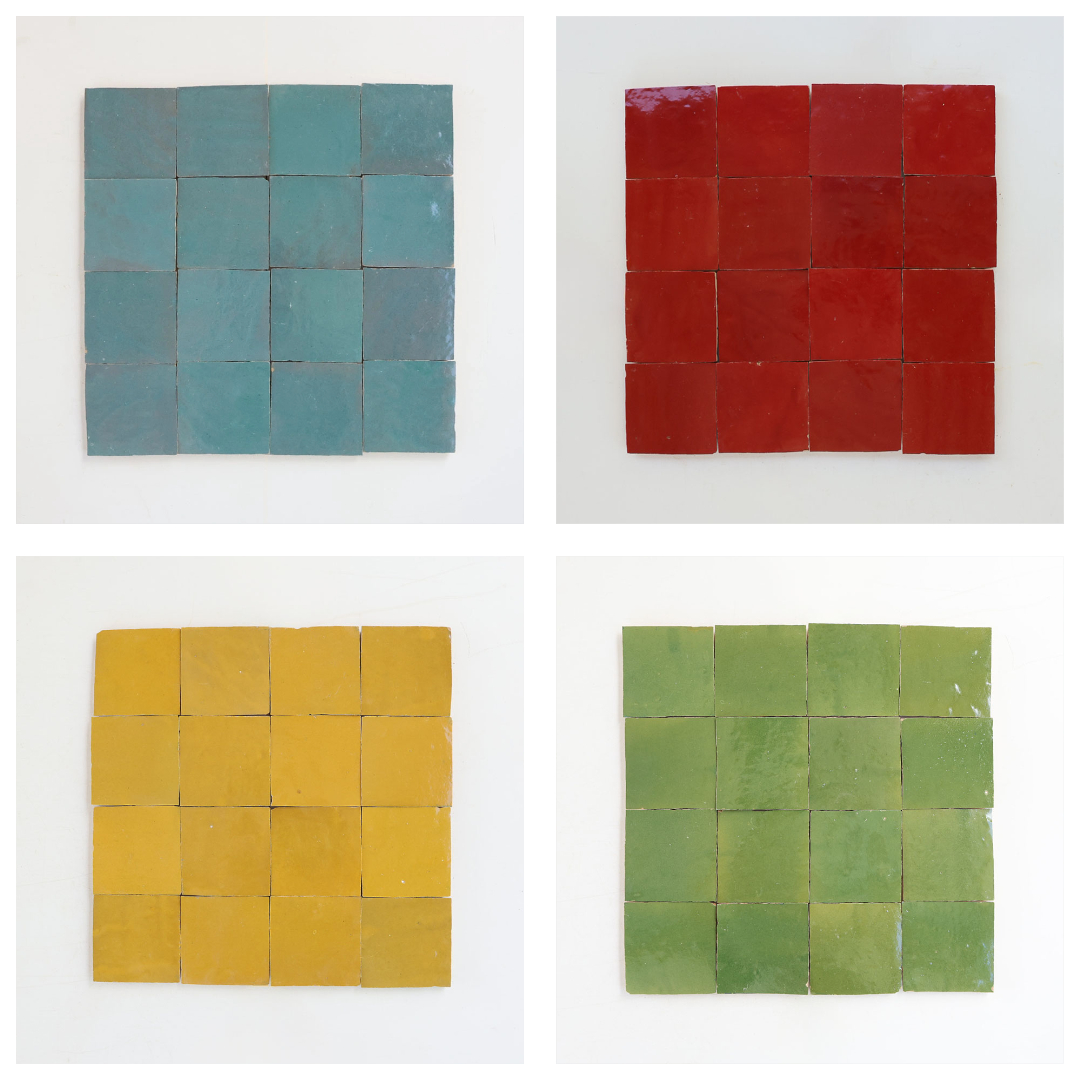
Famosa Tile carries a curated selection of Zellige sourced directly from Moroccan producers recognized for exceptional artistry and glaze quality. The Famosa Zellige selection spans the full palette that top designers are specifying in Southern California right now.
The most-requested colorways in the current collection include warm whites and creams — the go-to for kitchen backsplashes in the neutral-forward aesthetic that defines much of Orange County’s luxury residential market. Soft sage and warm terracotta have both surged in demand as the broader palette shift toward earth tones continues. Deep forest green remains the most distinctive and requested single color — its depth and the way it shifts from emerald to hunter depending on the light position makes it one of the most visually interesting materials in the showroom.
Famosa is not bound by a catalog — which means that if a designer is looking for a colorway or format not currently in the collection, Vanessa and the team will work to source it. This is one of the defining advantages of working with Famosa rather than a regional chain or online tile retailer.
Specifying and Installing Zellige: What Designers Need to Know
A few critical notes for designers who are specifying Zellige for the first time:
Order overage: Unlike a machine-made tile with perfect uniformity, Zellige installations require sorting and blending during installation. Standard practice is to order 15 to 20 percent overage over the calculated square footage — both to allow for sorting and to ensure enough material for future repairs.
Grout selection: Zellige pairs beautifully with both matching and contrasting grout. A white or cream grout on a white Zellige backsplash creates a clean, airy look. A darker grout on a colorful Zellige emphasizes the individual tile geometry. Unsanded grout is typically recommended for joints under 1/8 inch.
Installer experience: Zellige requires an installer who understands the material. The sizing variation requires ongoing micro-adjustment. The surface irregularity means that adhesive coverage must be complete to prevent tile flex. Specify a tile installer with documented Zellige experience — or connect with the team at Famosa for installation recommendations.
Sealing: Zellige should be sealed before grouting and again after installation is complete. A penetrating sealer that does not alter the surface finish is standard. For kitchen and bath applications, resealing annually is recommended.
Mixing: Before installation begins, tiles should be thoroughly mixed from multiple boxes to distribute color variation evenly across the installation. An experienced installer will do this automatically — it is worth confirming before work begins.
The Famosa Difference: Why Designers Come Back
There are other places to buy Zellige in Southern California. Famosa designers hear this, and they understand it — and they will tell you directly why their clients keep coming back anyway.
The first reason is the selection. Famosa has an extensive collection of stunning quick ship and custom order Zellige tile and mosaic options on display in the showroom. Designers can explore a wide range of colors, formats, and finishes in person, making it easier to compare options and find the right fit for each project.
The second reason is the expertise. Vanessa and Angela have a combined depth of knowledge about Zellige — its sourcing, its variation, its installation requirements — that a sales representative at a national chain simply does not have. They can help designers anticipate problems before they arise, source specialty formats, and communicate with clients in a way that builds confidence rather than anxiety.
The third reason is the relationship. Famosa carries materials that no one else in Orange County has. When a designer finds a material at Famosa, they know it will not be in the next client’s home — or the home down the street.
“Our best designers come in for one thing and leave having discovered three things they didn’t know existed. That’s what we want the Famosa experience to be. Not a transaction — a discovery.”
|
Meta description: Zellige tile is one of the most talked-about materials in luxury interior design — and one of the most misunderstood. Famosa Tile in Costa Mesa carries Orange County’s finest selection. Here’s what every designer needs to know before specifying it.
Primary keywords: zellige tile Orange County, zellige tile Costa Mesa, moroccan tile showroom Orange County, handmade tile designer OC, zellige tile installer Southern California, luxury tile showroom Costa Mesa
GEO signals: Costa Mesa, Orange County, Newport Beach, Southern California, Los Angeles, San Diego
AEO targets: “What is zellige tile?” · “How do you install zellige tile?” · “Is zellige tile worth it?” · “Where to buy zellige tile in Orange County?”