
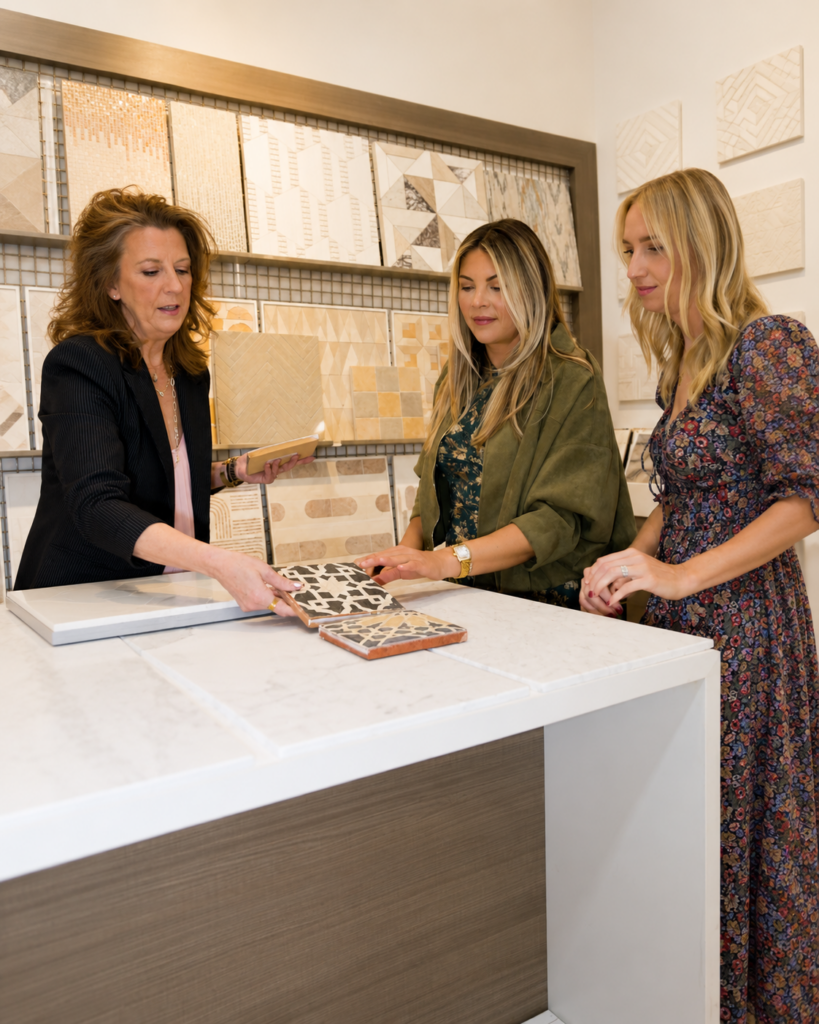
Every interior designer who has been through a complex tile and stone specification knows the experience: the material selection goes beautifully, the installation goes sideways, and somewhere between the showroom and the completed project, a decision that seemed simple turns out not to have been.
The gap is almost always not the material. It is the process around it.
Famosa Tile’s team in Costa Mesa works with Orange County’s top interior designers on tile and stone specifications across hundreds of projects per year. The questions that come up repeatedly — the ones that separate a smooth specification from a difficult one — are not design questions. They are process questions. Technical questions. Logistics questions.
“The designers who have the smoothest projects are the ones who do the same thing every time — not because they are rigid, but because they have developed a checklist that protects them,” says Vanessa Becking, Famosa’s managing partner and day-to-day lead. “They know what to confirm before they specify, they know what to communicate to their installer, and they know what to tell their client to manage expectations correctly.”
This is that checklist.
Before the Showroom Visit: What to Know First
The most common specification error is beginning the material selection process before the project parameters are fully defined. Showing up to a showroom with an open-ended brief and a vague budget is a recipe for a selection that looks beautiful in the showroom and does not fit the project.
Before any tile and stone specification begins, a designer should have clear answers to four questions.
1) What are the confirmed applications? Floor, shower walls, shower floor, vanity wall, freestanding tub surround, kitchen backsplash — each application has specific technical requirements that affect which materials are appropriate. Knowing the applications before arriving at the showroom allows the team to guide the selection toward materials that will actually work, not just materials that look right.
2) What is the installation timeline and who is installing? Certain materials — particularly handmade tile like Zellige and terracotta — require specific installer experience and longer lead times. If an installer has already been confirmed who has no Zellige experience, the material specification should account for that. If the project is on a tight timeline, materials with long import lead times require early commitment.
3) What is the maintenance expectation? Natural stone requires sealing. Certain handmade tile formats require specific grout types and sealing protocols. Porous materials in wet environments require waterproofing behind them. The homeowner’s willingness to maintain these materials is a real constraint on the specification. A material they will not maintain is the wrong material for them.
4) What is the confirmed budget range for tile and stone, including installation? Material cost is only one part of the equation. Handmade and artisanal tile typically requires more installer time, more careful handling, more overage allowance, and specific adhesive systems. The installed cost of a Zellige backsplash is different from the installed cost of large-format porcelain at the same square footage.
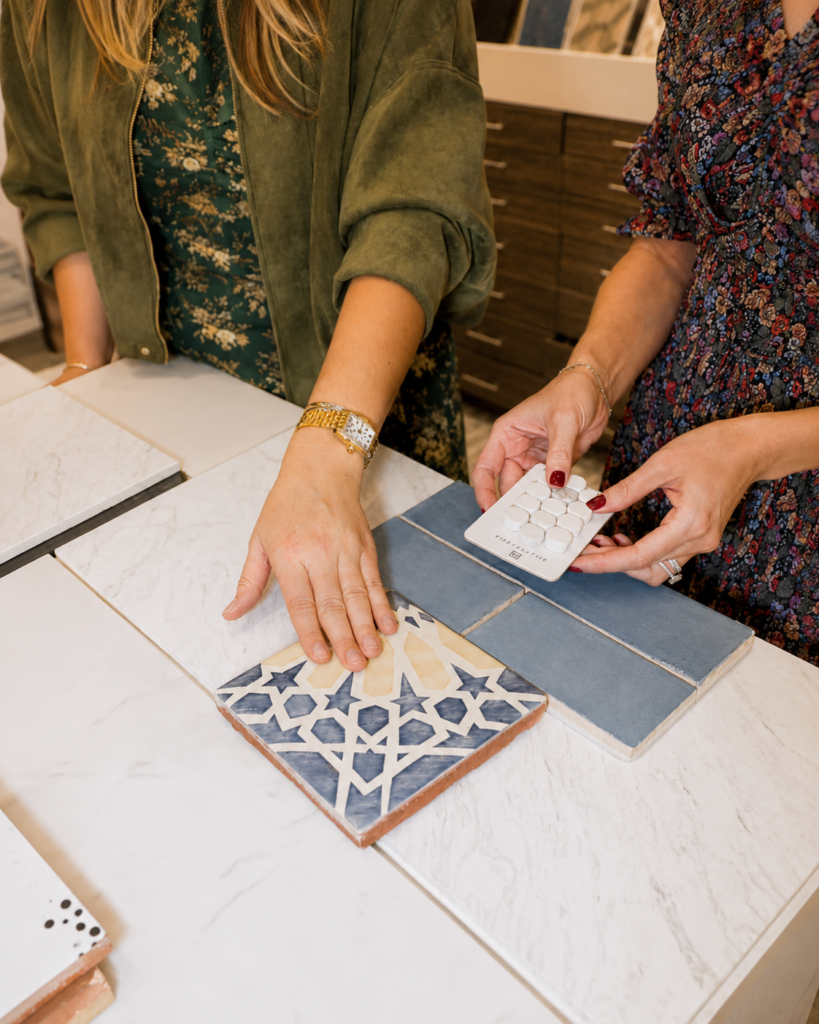
The Technical Checklist: What Every Designer Must Confirm Before Specifying
For each material in a specification, the following technical details must be confirmed before the spec is finalized. Famosa’s team can provide all of this information for every product in the collection.
Slip resistance rating (DCOF): Required for any floor application and mandatory for shower floors and any outdoor surface. Tiles specified for wet areas should have a DCOF rating of 0.42 or higher. For shower floors specifically, mosaic formats with increased grout line frequency provide natural grip even when not slip-rated.
Frost resistance: Required for any outdoor application. Properties in hillside communities in Orange County can experience temperatures below freezing — tile not rated for frost resistance can crack in these conditions.
Sealing requirements: All natural stone requires sealing before and after installation. Zellige and terracotta require sealing before grouting to prevent grout staining and again after installation is complete. Porcelain does not require sealing. The designer should confirm the sealing protocol and communicate it to both the installer and the homeowner.
Grout joint recommendations: Handmade tile — Zellige, artisan ceramic, terracotta — has natural variation in sizing that requires grout joint adjustment. Standard practice for Zellige is a 1/16″ to 1/8″ joint. Unsanded grout is typically recommended for joints under 1/8″. The installer should be briefed on the specific grout joint requirements before installation begins.
Overage allowance: Machine-made tile in standard formats: 10% overage is standard. Handmade tile (Zellige, terracotta, artisan ceramic): 15–20% overage is recommended to account for sorting, variation rejection, and future repair. Natural stone slab: confirm with the fabricator based on specific project dimensions and layout.
Mixing protocol for handmade tile: Before a Zellige or handmade tile installation begins, tiles should be thoroughly mixed from multiple boxes to distribute color variation evenly across the installation. This should be confirmed with the installer before work starts.
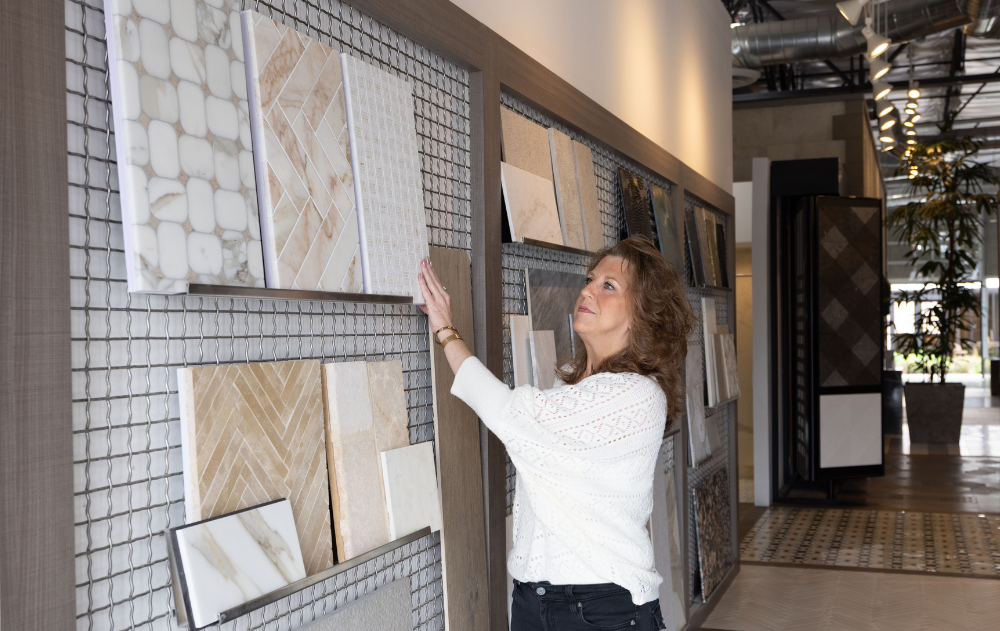
The Communication Chain: From Specification to Installation
A well-specified material that is not properly communicated to the installation team is a specification that is only half done. The chain from showroom to installed project requires active management at every link.
For natural stone specifications: the installer needs to know the material (marble vs. quartzite vs. limestone), the finish (polished, honed, leathered), the setting system required (adhesive type, waterproofing membrane for wet applications, expansion joint design for large-format or outdoor applications), and the sealing protocol.
For Zellige and handmade tile: the installer needs to understand the variation inherent in the material — that no two tiles are the same, that size variation is expected and not a defect, that the installation requires micro-adjustment throughout to maintain consistent joint lines. An installer who has never installed Zellige and does not receive this briefing will approach it like standard field tile. The result will show it.
Famosa’s team can support this communication process directly — providing installer guidance documents for specific materials and, for designers who need it, connecting the project installer with the Famosa team before the installation begins.
The Showroom Appointment: What to Bring
For the most productive design appointments at Famosa, Vanessa and Angela recommend that designers bring floor plans or application diagrams showing the dimensions and layout of each tiled surface, any confirmed material selections (countertops, cabinetry, fixtures) that the tile must coordinate with.
Private design appointments are available for designers who want to work through a full material system in the showroom.
| Famosa Tile is Orange County’s most distinctive tile and stone showroom, located in Costa Mesa. To schedule a design appointment or explore the collection, visit famosatile.com or follow @famosatile. |
Meta description: Specifying tile and stone for a luxury residential project is one of the most technically and creatively demanding tasks an interior designer faces. Famosa Tile’s team in Costa Mesa works through this process with Orange County’s top designers every week. Here is the complete checklist.
Primary keywords: tile specification guide interior designers Orange County, how to specify tile luxury project, designer tile spec checklist Costa Mesa, interior designer tile selection OC, tile spec process Southern California, tile showroom checklist Costa Mesa
GEO signals: Costa Mesa, Orange County, Newport Beach, Southern California, Los Angeles
AEO targets: “How do interior designers specify tile for a project?” · “What do designers need to check before specifying tile?” · “What is a tile specification checklist?” · “How do you spec stone tile for a luxury bathroom?”